Regional Spirits of the World: Rakia, Arak, Chacha, Ouzo and More
Travel almost anywhere and you will find a local spirit poured with pride — often homemade, always tied to hospitality. Here is a tour of the world's most interesting regional drinks.
Fruit brandies of the Balkans and Central Europe
Rakia (Balkans)
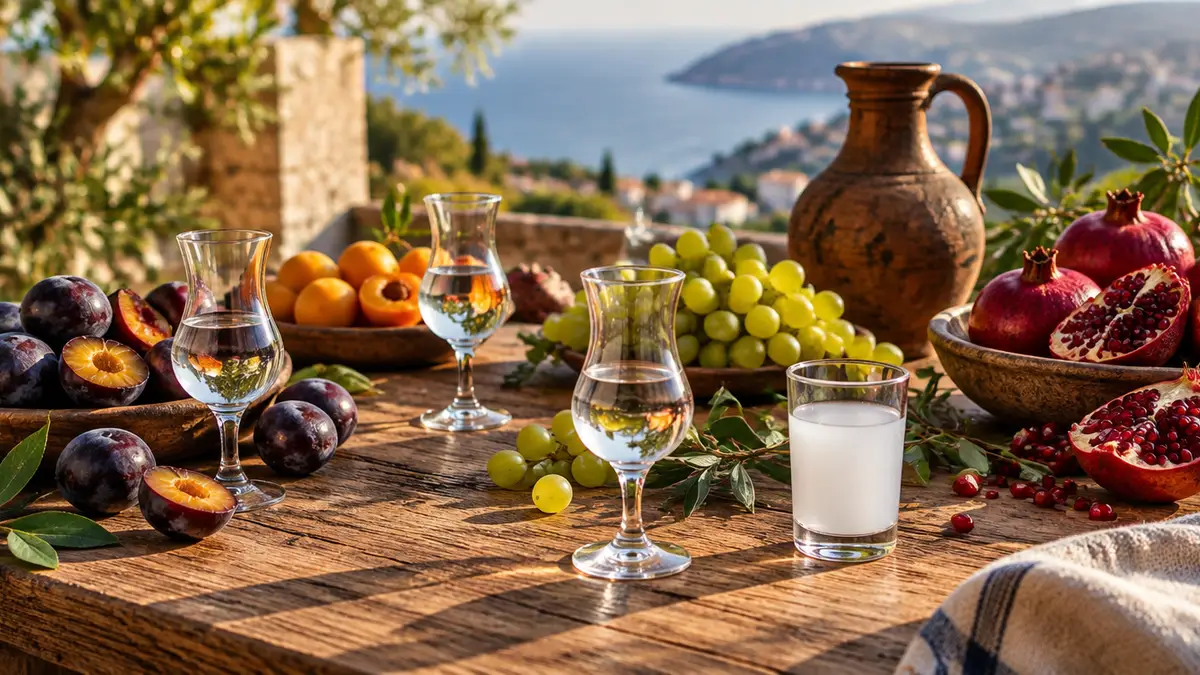
Rakia is the national drink across much of the Balkans — Serbia, Bulgaria, Croatia, North Macedonia, Bosnia and beyond. It is a fruit brandy most often made from plums (šljivovica / slivovitz), grapes (lozovača), apricots or quince. Typically 40–50% ABV, it is sipped slowly from small glasses, often as a welcome drink or before meals with salads and cured meats.
Pálinka (Hungary)
A protected fruit spirit that must be made in Hungary from fruit grown there — apricot, plum, pear and cherry are favourites. It is distilled from fruit mash, not flavoured.
Eaux-de-vie (France, Germany, Switzerland, Austria)
Clear fruit brandies such as kirsch (cherry), Poire Williams (pear) and mirabelle (plum). Often served cool, not frozen, after meals.
Grape pomace spirits
Chacha (Georgia)
Georgia's powerful clear spirit is distilled from grape pomace — the skins, seeds and stems left after winemaking. Often 40–65% ABV, it is a staple of Georgian feasts (supra), where it accompanies long rounds of toasts led by the tamada, or toastmaster. Some chacha is aged in oak.
Grappa (Italy) and orujo (Spain)
Italy's grappa is made from pomace and can range from fiery to elegant, especially single-grape grappas. Spain's orujo, particularly from Galicia, is used in the flaming ritual queimada.
Tsipouro and zivania
Greece's tsipouro (with or without anise) and Cyprus's zivania are also pomace spirits served with small plates of meze.
Anise spirits of the Mediterranean
| Drink | Where | Notes |
|---|---|---|
| Arak | Lebanon, Syria, Jordan, Israel, Palestine | Grape spirit distilled with aniseed; mixed with water and ice; served with mezze |
| Ouzo | Greece | Anise-flavoured spirit; drunk with water and ice alongside seafood meze |
| Rakı | Turkey | Grape-based anise spirit — "lion's milk"; part of long dinners with meze |
| Pastis | France (Marseille) | Anise and liquorice liqueur-spirit mixed with five parts water |
| Sambuca | Italy | Sweet anise liqueur, often served with coffee beans |
Anise contains an oil called anethole that dissolves in strong alcohol but not in water. When you add water, it forms tiny droplets that turn the drink cloudy white — the "ouzo effect". Add water first, then ice, or the oil can crystallise.
Northern Europe
- Akvavit (Scandinavia): a spirit flavoured with caraway or dill, sometimes aged. Norwegian "Linie" akvavit is famously aged in casks shipped across the equator. Served cold with herring and at Christmas.
- Genever (Netherlands, Belgium): the malty ancestor of gin, traditionally served in a tulip glass filled to the brim.
- Herbal bitters (Germany, Czech Republic, Hungary): strong herbal liqueurs traditionally taken after heavy meals.
- Mead (across Europe): fermented honey wine, one of the oldest drinks known.
Asia
- Baijiu (China): the world's most-consumed spirit by volume. Made from sorghum and other grains fermented with a starter called qu, often 50–60% ABV. Styles include strong-aroma, light-aroma and sauce-aroma. Served in tiny glasses at banquets with toasts.
- Soju (South Korea): the leading soju brand is regularly reported as the world's best-selling spirit brand by volume. Modern soju is usually diluted to 12–20% ABV and often flavoured with fruit. Traditionally drunk with food and shared among friends.
- Shochu (Japan): distilled from sweet potato, barley, rice or brown sugar, around 25% ABV, drunk on ice, with water or hot water.
- Arrack (Sri Lanka, Indonesia): distilled from coconut palm sap or sugar cane and rice.
The Americas
- Pisco (Peru, Chile): grape brandy, the base of the Pisco Sour.
- Cachaça (Brazil): fresh sugar cane spirit, the base of the Caipirinha.
- Aguardiente (Colombia and more): anise-flavoured cane spirit, the Colombian national drink.
- Mezcal, raicilla and sotol (Mexico): see our agave guide.
Africa
- Amarula (South Africa): a cream liqueur made with the fruit of the marula tree.
- Palm wine and traditional sorghum beers: fermented drinks found across West, East and Southern Africa, often homemade and central to community life.
- Tej (Ethiopia): honey wine flavoured with gesho leaves.
Tasting regional spirits safely
Unlicensed, homemade distilled spirits can contain dangerous levels of methanol, which can cause blindness or death — outbreaks of methanol poisoning are reported regularly in several countries. When travelling, buy bottles from licensed shops and drink in reputable venues. Seek urgent medical help for vision problems, severe headache or confusion after drinking.
- Many regional spirits are 45–60% ABV — much stronger than they taste when mixed with water.
- Hospitality toasts can be frequent. It is polite to sip rather than drain your glass, and you can always toast with water or tea.
- Always eat — these drinks are traditionally served with food for good reason.
Taste slowly, alternate with water and eat something first. One standard drink of spirits is just 1.5 oz (44 ml) at 40% ABV. Never drink and drive. What counts as one drink?
Frequently asked questions
What is rakia made from?
Rakia is a Balkan fruit brandy, most often made from plums, grapes, apricots, pears or quince.
What is chacha?
Chacha is a strong Georgian spirit distilled from grape pomace, the skins and seeds left after winemaking. It is often 40–65% ABV and served at feasts with many toasts.
What is the most consumed spirit in the world?
Chinese baijiu is widely reported to be the most consumed spirit in the world by volume, largely because of the size of the Chinese market.