Beer Styles Explained: Lager, Ale, Stout, IPA, Wheat and Craft
Beer is the world's most popular alcoholic drink, and far more varied than the pale lager most people know. Four ingredients — water, malt, hops and yeast — combine into hundreds of styles.
- Made from
- Water, malted grain, hops, yeast
- Typical ABV
- 4–7% (0.5% to 12%+)
- Two families
- Lager and ale
- Standard serving
- 12 oz / 355 ml at 5%
- Serve
- 3–13 °C depending on style
A short history of beer
Beer is one of humanity's oldest prepared drinks. Evidence of beer-making in Mesopotamia and ancient Egypt dates back over 5,000 years, and some archaeologists believe brewing may have encouraged early farming. Medieval European monasteries refined brewing, and hops became standard from around the 9th–15th centuries for their bitterness and preservative power.
The Bavarian Purity Law of 1516 (Reinheitsgebot) limited beer to water, barley and hops (yeast was added once it was understood). In 1842, the Czech town of Plzeň produced the first golden pilsner, which went on to conquer the world. Since the 1970s–80s, the craft beer movement — led by small breweries in the USA and UK — has revived old styles and invented many new ones.
How beer is made
- Malting: barley is soaked, allowed to sprout, then dried in a kiln. Roasting longer creates darker malts with caramel, coffee and chocolate flavours.
- Mashing: crushed malt is steeped in hot water, turning starches into fermentable sugars. The sweet liquid is called wort.
- Boiling and hopping: wort is boiled with hops. Early additions give bitterness; late additions give aroma.
- Fermentation: the cooled wort is fermented with yeast for days or weeks.
- Conditioning: the beer matures (for weeks in the case of lager), is carbonated and packaged.
Lager vs ale: the big divide
| Lager | Ale | |
|---|---|---|
| Yeast | Bottom-fermenting | Top-fermenting |
| Fermentation temperature | Cool: about 7–13 °C / 45–55 °F | Warm: about 15–24 °C / 59–75 °F |
| Conditioning | Weeks of cold storage (lagern = "to store") | Shorter |
| Flavour | Clean, crisp, malt and hop-focused | Fruitier, more yeast-driven character |
| Examples | Pilsner, helles, Vienna lager, bock, Märzen | Pale ale, IPA, stout, porter, wheat beer, Belgian ales |
The main beer styles
| Style | Family | ABV | Taste |
|---|---|---|---|
| Pilsner | Lager | 4.5–5.5% | Crisp, bready, floral-herbal hop bitterness |
| Helles | Lager | 4.5–5.5% | Soft, malty, lightly sweet, low bitterness |
| Märzen / Oktoberfest | Lager | 5.5–6% | Toasty, amber, smooth |
| Bock / Doppelbock | Lager | 6–8%+ | Rich, malty, caramel, warming |
| Hefeweizen | Ale (wheat) | 4.5–5.5% | Hazy, banana, clove, fluffy |
| Witbier | Ale (wheat) | 4.5–5.5% | Orange peel, coriander, light |
| Pale ale | Ale | 4.5–5.5% | Balanced malt and citrusy or earthy hops |
| IPA | Ale | 5.5–7.5% | Strongly hoppy: citrus, pine, tropical fruit, bitter |
| Hazy / New England IPA | Ale | 6–7% | Juicy, soft, cloudy, low perceived bitterness |
| Double / Imperial IPA | Ale | 8–10% | Intense hops and alcohol |
| Porter | Ale | 4.5–6.5% | Chocolate, caramel, roasted |
| Stout | Ale | 4–7% | Coffee, dark chocolate, creamy |
| Imperial stout | Ale | 8–12%+ | Massive, rich, often barrel-aged |
| Belgian Tripel | Ale | 8–9.5% | Golden, spicy, fruity, deceptively strong |
| Sour / Gose / Lambic | Wild or mixed fermentation | 3–7% | Tart, fruity, refreshing |
A black Irish dry stout can be just 4.2% ABV — lighter than many golden lagers. Colour comes from roasted malt, not alcohol.
Craft beer
"Craft" generally means beer from small, independent breweries that emphasise flavour, tradition or experimentation. Craft brewers popularised hop-forward American IPAs, barrel-aged stouts, fruited sours and countless local specialties. The flip side: many craft beers are 6–10% ABV and served in 16 oz (473 ml) cans, which can mean two or three standard drinks per can. Check the label.
How to drink beer
- Temperature: light lagers 3–5 °C; pale ales and IPAs 7–10 °C; stouts, Belgian and strong ales 10–13 °C.
- Pour into a glass: tilt the glass at 45°, pour down the side, then straighten to build a head of about two fingers. The foam carries aroma.
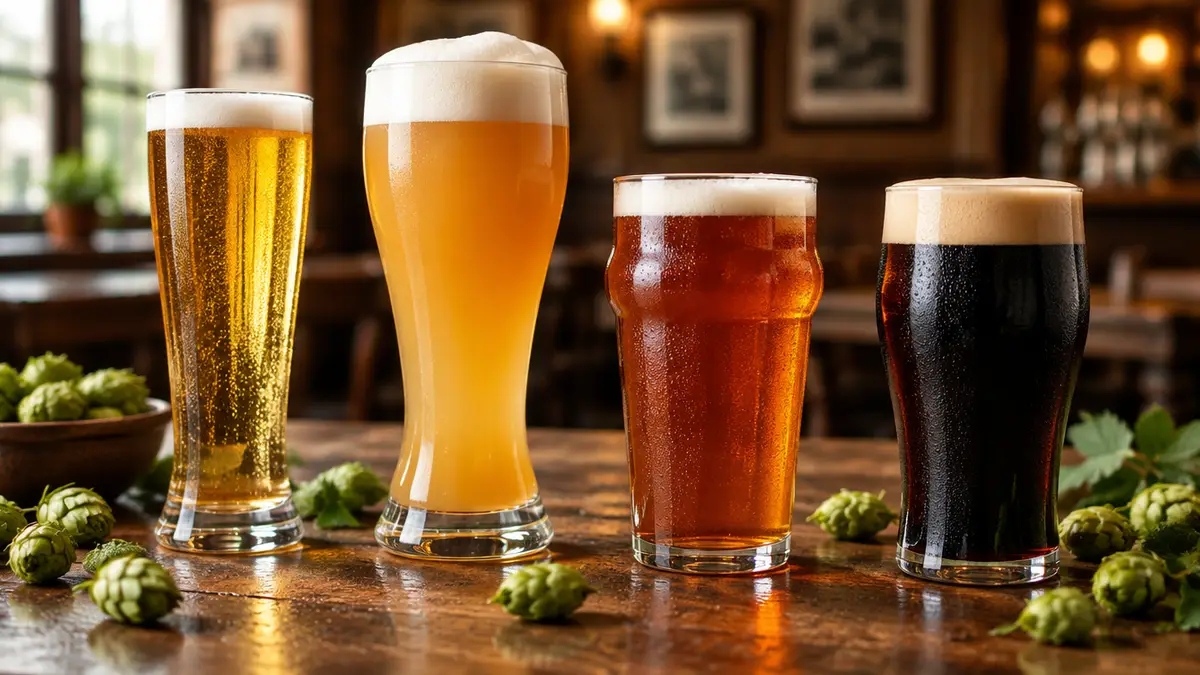
- Glassware: tall pilsner glasses for lager, tall curved weizen glasses for wheat beer, tulips for strong and aromatic beers, a nonic pint for ales.
- Freshness: drink hoppy beers fresh — within about three months of packaging.
- With food: see beer and food pairing.
What to try first
The classic golden lager at its best: crisp and flavourful.
Banana and clove, soft and low in bitterness.
Citrusy and spiced — lovely with seafood.
An easy introduction to citrusy hops.
Roasty and creamy, yet only about 4% ABV.
Juicy tropical fruit without harsh bitterness.
Taste slowly, alternate with water and eat something first. One standard drink of spirits is just 1.5 oz (44 ml) at 40% ABV. Never drink and drive. What counts as one drink?
Frequently asked questions
What is the difference between lager and ale?
Lager is fermented with bottom-fermenting yeast at cool temperatures and conditioned cold, giving a clean, crisp taste. Ale uses top-fermenting yeast at warmer temperatures, producing fruitier flavours.
What does IPA stand for?
India Pale Ale. The style developed in 18th- and 19th-century England as a strongly hopped pale ale; today it is the flagship of craft brewing.
Is alcohol-free beer really alcohol-free?
In the USA and UK, "non-alcoholic" beer can contain up to 0.5% ABV; "alcohol-free" in the UK means 0.05% or less. People who must avoid alcohol completely should check labels carefully.