Tequila and Mezcal Guide: Agave Spirits Explained
Forget salt, lime and a wince. Good tequila and mezcal are complex, delicious spirits made from agave plants that take up to a decade or more to mature. Here is how to appreciate them.
- Made from
- Agave (tequila: blue Weber agave only)
- Typical ABV
- 38–40% (mezcal often 45–55%)
- Origin
- Mexico — protected designations of origin
- Standard pour
- 1.5 oz / 44 ml
- Serve
- Sipped neat, or in a Margarita or Paloma
A short history
Indigenous peoples in Mexico fermented agave sap into pulque for more than a thousand years. After the Spanish brought distillation in the 16th century, locals began distilling roasted agave. The spirit made around the town of Tequila in Jalisco became famous, and in 1974 Mexico declared "tequila" a protected designation of origin. Mezcal gained its own protected designation in 1994.
Tequila vs mezcal
All tequila is technically a type of mezcal (agave spirit), but not all mezcal is tequila.
| Tequila | Mezcal | |
|---|---|---|
| Agave | Blue Weber agave only | Over 30 permitted species; espadín is most common |
| Where | Jalisco and parts of four other states | Oaxaca (most), plus several other states |
| Cooking | Usually steamed in ovens or autoclaves | Traditionally roasted in earthen pits over wood — gives smoky flavour |
| Taste | Sweet cooked agave, citrus, pepper, herbs | Often smoky, earthy, fruity, very varied by species |
| Production | Often large-scale | Often small-batch and artisanal |
How tequila is made
- Harvest: blue agave matures for about 5–8 years. Skilled jimadores cut away the leaves to reveal the heart, or piña.
- Cooking: piñas are cooked to turn starch into fermentable sugars.
- Milling: cooked agave is crushed to extract sweet juice — traditionally with a stone wheel called a tahona.
- Fermentation and distillation: fermented juice is distilled at least twice.
- Ageing (optional): in oak barrels, often ex-bourbon.
Tequila categories by age
| Category | Ageing | Taste |
|---|---|---|
| Blanco / plata / silver | Unaged or up to 2 months | Bright, peppery, pure agave — best for cocktails and for tasting agave itself |
| Reposado ("rested") | 2–12 months in oak | Softer, with vanilla and caramel |
| Añejo ("aged") | 1–3 years in oak | Rich, whisky-like, for sipping |
| Extra añejo | Over 3 years | Deep, oaky, complex |
| Cristalino | Aged tequila filtered to remove colour | Smooth, lighter oak |
Why "100% agave" matters
Tequila labelled "100% de agave" is made only from blue agave sugars. Tequila without this statement is a mixto: up to 49% of its sugars can come from other sources (usually cane sugar), and it may contain caramel colour and flavourings. Many people find mixtos harsher. Always look for 100% agave.
Mezcal: the smoky cousin
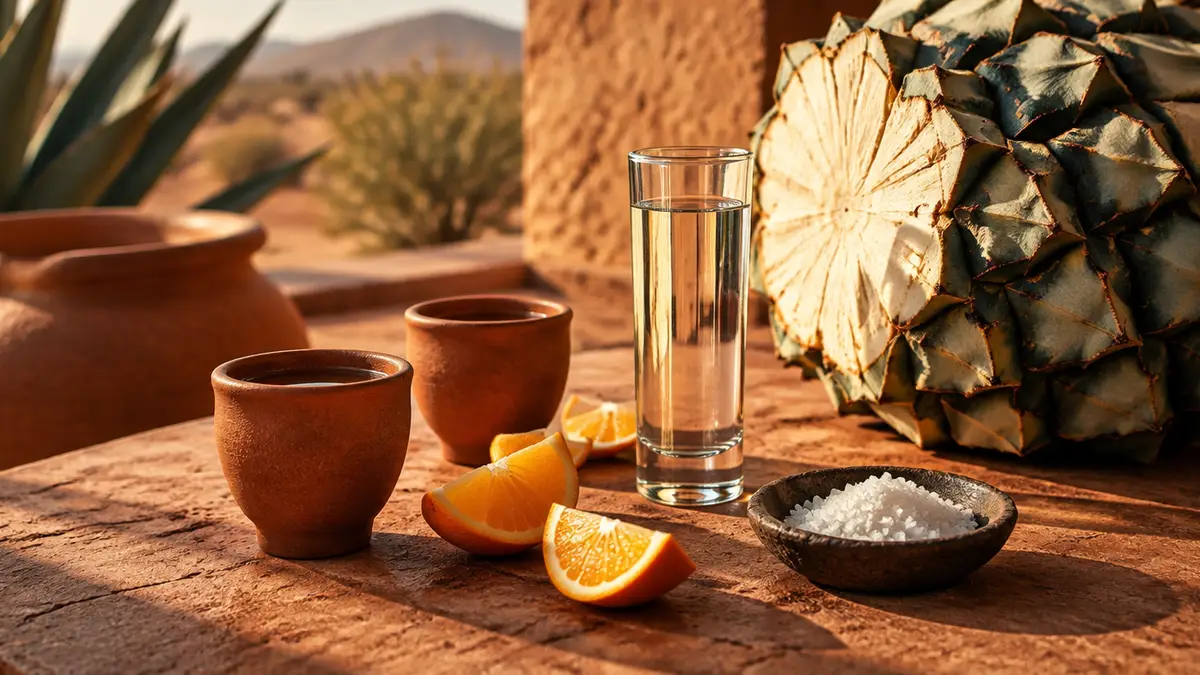
Mezcal categories are about production method rather than age: mezcal, mezcal artesanal and mezcal ancestral (clay-pot distillation, the most traditional). Wild agaves such as tobalá and tepeztate can take 12–25 years to mature, which is why they are expensive. Mezcal is traditionally sipped from a small clay cup (copita) with orange slices and sal de gusano (a seasoning made with toasted agave larvae, salt and chilli).
Other agave spirits
Raicilla (Jalisco), bacanora (Sonora) and sotol (made from the desert spoon plant, not technically an agave) are worth trying if you enjoy mezcal.
How to drink tequila and mezcal
- Sip, don't shoot: a small glass of good blanco or reposado, sipped slowly, reveals its sweet agave and pepper.
- Sangrita: in Jalisco, tequila is often sipped alongside sangrita, a spicy chaser of citrus juices and chilli.
- Cocktails: the Margarita, Paloma, Ranch Water and mezcal Negroni.
- The salt-and-lime ritual was designed to mask harsh mixto tequila. With 100% agave you won't need it.
What to try first
Soft and sweet — the smoothest introduction.
Grapefruit and agave: fresh and simple.
The benchmark agave cocktail.
Adds gentle smoke to a familiar drink.
Taste slowly, alternate with water and eat something first. One standard drink of spirits is just 1.5 oz (44 ml) at 40% ABV. Never drink and drive. What counts as one drink?
Frequently asked questions
Is there a worm in tequila?
No. Tequila never contains a worm. A larva is occasionally added to some mezcals as a marketing gimmick, mostly for export; quality producers don't do it.
What is the difference between tequila and mezcal?
Tequila is made only from blue Weber agave in specific Mexican states and usually steamed; mezcal can use many agave species, is mostly from Oaxaca and is traditionally pit-roasted, giving a smoky flavour.
Does good tequila cause fewer hangovers?
There is no good evidence that any spirit prevents hangovers. The amount of alcohol you drink matters most. Additive-free, 100% agave tequila may simply be more pleasant to sip slowly.