Whisky Guide: Scotch, Irish, Bourbon and Japanese Whisky
Whisky is distilled from fermented grain and aged in wooden casks — but a smoky Islay malt, a sweet bourbon and a delicate Japanese blend can taste like different drinks entirely. Here is how they differ.
- Made from
- Malted barley, corn, rye, wheat
- Typical ABV
- 40–46% (cask strength 50–65%)
- Aged in
- Oak casks — minimum 3 years in Scotland and Ireland
- Standard pour
- 1.5 oz / 44 ml
- Serve
- Neat, with water, on ice, or in a highball
Whisky or whiskey?
Both are correct. Scotland, Canada and Japan generally write whisky; Ireland and the USA generally write whiskey. The word comes from the Gaelic uisce beatha — "water of life".
A short history
Distillation spread from the Middle East to European monasteries in the Middle Ages. The first written record of Scotch whisky is from 1494, when a friar was granted malt "to make aqua vitae". Ireland has an equally old tradition and was the world's largest whiskey producer in the 19th century. Scottish and Irish emigrants took distilling to North America, where corn and rye created bourbon and rye whiskey. Japan's first commercial whisky distillery opened in 1923, and Japanese whiskies now win international awards.
How whisky is made
- Malting and mashing: grain (and malted barley, which supplies enzymes) is ground and mixed with hot water to extract sugars.
- Fermentation: yeast turns the sweet liquid into a beer-like "wash" of around 8% ABV.
- Distillation: usually twice in copper pot stills (Scotch malt) or in column stills (grain whisky, bourbon). Irish whiskey is often distilled three times.
- Maturation: the clear "new make" spirit is aged in oak casks, which provide most of the colour and much of the flavour.
- Bottling: whisky is usually diluted to 40–46% ABV. Cask-strength whisky is bottled undiluted.
Ex-bourbon barrels give vanilla, coconut and honey; ex-sherry casks give dried fruit, spice and nuttiness; new charred oak (required for bourbon) gives deep caramel and toast. Up to 60–70% of flavour can come from the wood.
Scotch whisky
Scotch must be made in Scotland and aged for at least three years in oak casks. Main categories:
- Single malt: 100% malted barley, pot stills, one distillery.
- Single grain: other grains, usually column stills, one distillery.
- Blended Scotch: malt and grain whiskies from many distilleries — about 90% of Scotch sold.
- Blended malt: single malts from several distilleries, no grain whisky.
| Region | Typical style |
|---|---|
| Speyside | Fruity, honeyed, often sherried — the most distilleries of any region |
| Highlands | Very varied: rich and malty to heathery and lightly smoky |
| Islay | Peaty, smoky, medicinal, maritime |
| Lowlands | Light, grassy, floral |
| Campbeltown | Briny, oily, slightly smoky |
| Islands (unofficial) | Maritime, often gently peated (Skye, Orkney, Jura, Mull) |
Irish whiskey
Irish whiskey must be aged at least three years on the island of Ireland. It is often triple-distilled and unpeated, which gives a famously smooth, light character with notes of honey, vanilla and green apple. A distinctive local style is single pot still whiskey, made from a mix of malted and unmalted barley, which adds a creamy, spicy texture.
Bourbon and American whiskey
| Type | Key rules | Taste |
|---|---|---|
| Bourbon | Made in the USA, at least 51% corn, aged in new charred oak containers, no additives | Sweet: vanilla, caramel, toffee, baking spice |
| Straight bourbon | Bourbon aged at least 2 years | As above, more depth |
| Rye whiskey | At least 51% rye, new charred oak | Spicier, drier, peppery |
| Tennessee whiskey | Bourbon-style, filtered through maple charcoal (Lincoln County Process) | Mellow, sweet, slightly sooty |
| Wheated bourbon | Wheat instead of rye as secondary grain | Softer, rounder, bready |
Despite popular belief, bourbon does not have to come from Kentucky — though most of it does.
Japanese whisky
Japanese whisky was modelled on Scotch, and many distilleries use similar methods — but with a distinctive focus on balance, precision and blending. Japanese oak (mizunara) can add sandalwood and incense notes. Since 2021 the Japan Spirits & Liqueurs Makers Association has standards requiring "Japanese whisky" to be fermented, distilled, aged (at least 3 years) and bottled in Japan. Some labels without this designation contain imported whisky, so check the back label.
Other whiskies
Canadian whisky is typically light and smooth, often blended from corn and rye. Excellent whiskies are now also made in India, Taiwan, Australia, England, Wales, France and Scandinavia.
How to drink whisky
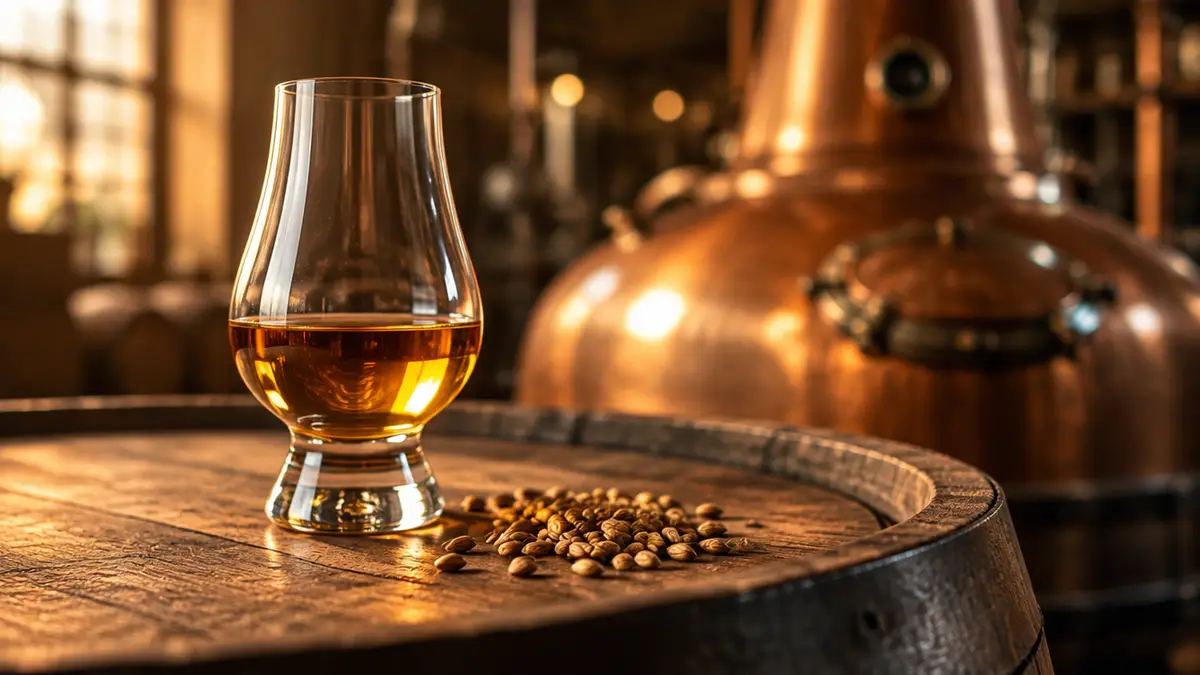
- Neat: in a tulip-shaped glass (like a Glencairn) at room temperature, sipped slowly.
- With water: a few drops release aroma and soften the alcohol. Essential for cask-strength whisky.
- On the rocks: one large ice cube chills with less dilution. Ice mutes aroma, so it suits bourbon and blends more than delicate malts.
- Highball: whisky and soda water (1:3) over ice — hugely popular in Japan.
- In cocktails: the Old Fashioned, Manhattan, Whiskey Sour and Irish Coffee.
What to try first
Light, smooth and honeyed. Perfect first sip.
Sweet vanilla and caramel; lovely with ginger ale.
Fruit and honey, no smoke. A classic introduction to malt.
Refreshing, delicate and elegant.
A gentle step toward smoky whisky before Islay.
Taste slowly, alternate with water and eat something first. One standard drink of spirits is just 1.5 oz (44 ml) at 40% ABV. Never drink and drive. What counts as one drink?
Frequently asked questions
What is the difference between Scotch and bourbon?
Scotch is made in Scotland, mostly from malted barley, and aged at least three years usually in used casks. Bourbon is American, made from at least 51% corn and aged in new charred oak, which makes it sweeter with more vanilla and caramel.
Does whisky improve in the bottle?
No. Whisky only ages in the cask. A sealed bottle stays essentially the same for decades if stored upright away from light and heat.
Is older whisky always better?
Not necessarily. Older whisky has more oak influence, which some people love and others find too woody. Many excellent whiskies are 8–12 years old or have no age statement.