Cognac and Brandy Guide: Armagnac, VS, VSOP, XO and More
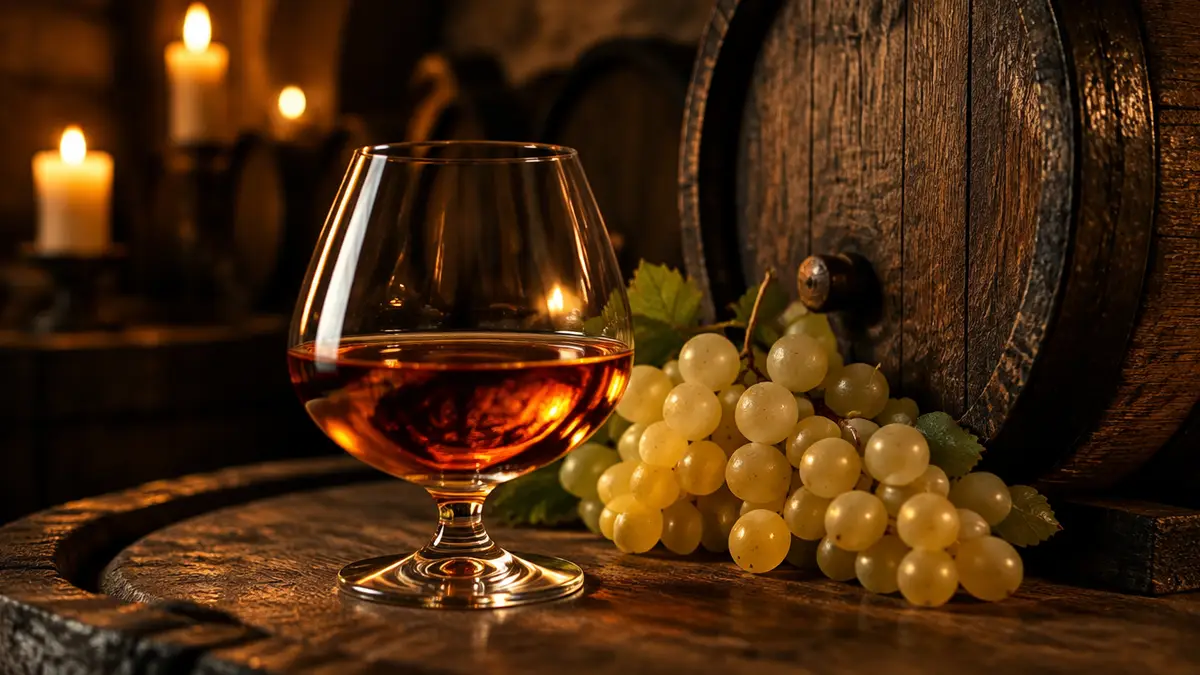
Brandy is distilled wine — or, more broadly, distilled fruit. Its most famous form, cognac, is one of the most regulated and refined spirits on earth. Here is how to find your way around the category.
- Made from
- Wine (or fermented fruit)
- Typical ABV
- 40% (35–45%)
- Famous types
- Cognac, Armagnac, Brandy de Jerez, Pisco, Calvados
- Standard pour
- 1.5 oz / 44 ml
- Serve
- Neat at room temperature, or in cocktails
A short history
The word brandy comes from the Dutch brandewijn, "burnt wine". In the 16th and 17th centuries Dutch traders distilled French wines to make them easier to ship and preserve. They noticed the spirit improved in oak casks during long voyages. Around the town of Cognac in western France, a double-distillation tradition developed and the region's brandy became famous worldwide. Armagnac, in Gascony, is even older, with records from the early 1400s.
How cognac is made
- Grapes: mostly Ugni Blanc, which gives a thin, acidic white wine — perfect for distilling.
- Wine: the grapes are fermented into a wine of about 8–9% ABV.
- Double distillation: in traditional copper alembic charentais pot stills, producing a clear eau-de-vie of about 70% ABV.
- Ageing: in French oak casks (Limousin or Tronçais) for at least two years, often decades.
- Blending: the cellar master blends eaux-de-vie of different ages and crus, then reduces to bottling strength.
Cognac grades: VS, VSOP, XO
| Grade | Minimum age | Style | Best use |
|---|---|---|---|
| VS / *** | 2 years | Young, fruity, lively | Cocktails, highballs |
| VSOP | 4 years | Rounder, vanilla, spice, dried fruit | Sipping or premium cocktails |
| Napoléon | 6 years | Richer, more oak | Sipping |
| XO | 10 years | Complex: dried fig, leather, nuts, spice, long finish | Slow sipping after dinner |
| XXO / Hors d'Âge | 14 / 10+ years | Very old, intense | Special occasions |
Cognac has six growing areas (crus). Grande Champagne and Petite Champagne produce the most elegant, long-lived spirits; "Fine Champagne" on the label means a blend of these two.
Armagnac
Armagnac comes from Gascony in south-west France. It is usually distilled once in a column still (the alambic armagnacais), which keeps more fruit and texture. It is often more rustic and powerful than cognac, and many armagnacs are sold as single vintages. Armagnac also uses VS, VSOP and XO grades.
Other brandies of the world
| Brandy | Origin | Made from | Taste |
|---|---|---|---|
| Brandy de Jerez | Spain | Wine, aged in sherry casks by the solera system | Rich, sweet, raisiny |
| Pisco | Peru and Chile | Aromatic grapes, often unaged | Floral, fruity — star of the Pisco Sour |
| Calvados | Normandy, France | Apples (and pears) | Baked apple, oak |
| Grappa | Italy | Grape pomace (skins and seeds left after winemaking) | Intense, grapey, often unaged |
| Metaxa | Greece | Brandy blended with Muscat wine and botanicals | Sweet, aromatic |
| American and South African brandy | USA, South Africa | Wine, pot or column still | Varies — good value mixing brandies |
| Fruit brandy (eau-de-vie) | Central Europe, Alsace, Balkans | Plums, pears, cherries, apricots | Clear, intensely fruity — see regional spirits |
How to drink cognac and brandy
- Glass: a small tulip glass concentrates aroma better than a large balloon snifter.
- Temperature: room temperature. Warming the glass over a flame is an old habit that mainly releases alcohol vapour — cupping it in your hand is enough.
- Water or ice: a drop of water can open up aromas; in hot weather, VS or VSOP over ice or with tonic is popular in France.
- Cocktails: the Sidecar, Brandy Alexander, Vieux Carré and French 75 (originally made with cognac).
- With food: XO with dark chocolate, walnuts, aged cheeses or a cigar-free after-dinner conversation.
What to try first
The classic introduction: fruity, soft and warming.
Shows how well brandy works in cocktails.
Light, frothy and citrusy with floral grape notes.
An autumn pairing that always works.
Taste slowly, alternate with water and eat something first. One standard drink of spirits is just 1.5 oz (44 ml) at 40% ABV. Never drink and drive. What counts as one drink?
Frequently asked questions
Is cognac a type of brandy?
Yes. All cognac is brandy, but only brandy made in the Cognac region of France under strict rules — specific grapes, double distillation in copper pot stills and at least two years in French oak — can be called cognac.
What does VSOP stand for?
Very Superior Old Pale. It indicates the youngest brandy in the blend has aged at least four years in oak.
What is the difference between cognac and armagnac?
Both are French grape brandies. Cognac is double-distilled in pot stills and tends to be more refined; armagnac is usually distilled once in a column still, giving a more robust, fruity spirit, and is often sold by vintage.