Gin Guide: Styles, Botanicals and the Perfect Gin and Tonic
Gin is a spirit flavoured with juniper berries and other botanicals — which means every gin is a recipe. From classic pine-and-citrus London Dry to floral modern styles, it is the most creative spirit in the bar.
- Made from
- Neutral grain spirit + juniper and botanicals
- Typical ABV
- 37.5–47% (Navy Strength 57%)
- Key flavour
- Juniper (required by law)
- Standard pour
- 1.5 oz / 44 ml
- Serve
- G&T, Martini, Negroni, Tom Collins
A short history
Gin descends from genever, a malty juniper spirit made in the Netherlands and Belgium from the 16th century. English soldiers brought it home, and in the early 18th century cheap, poorly made gin flooded London in the "Gin Craze", with devastating social consequences. Regulation, better stills and the new column still produced cleaner spirits, and by the 19th century "London Dry" gin had become refined and respectable. British colonists mixed gin with quinine tonic water to make antimalarial medicine more palatable — the origin of the gin and tonic. Since the 2000s, a craft gin boom has produced thousands of new gins worldwide.
How gin is made
- Base spirit: a high-strength neutral spirit, usually from grain.
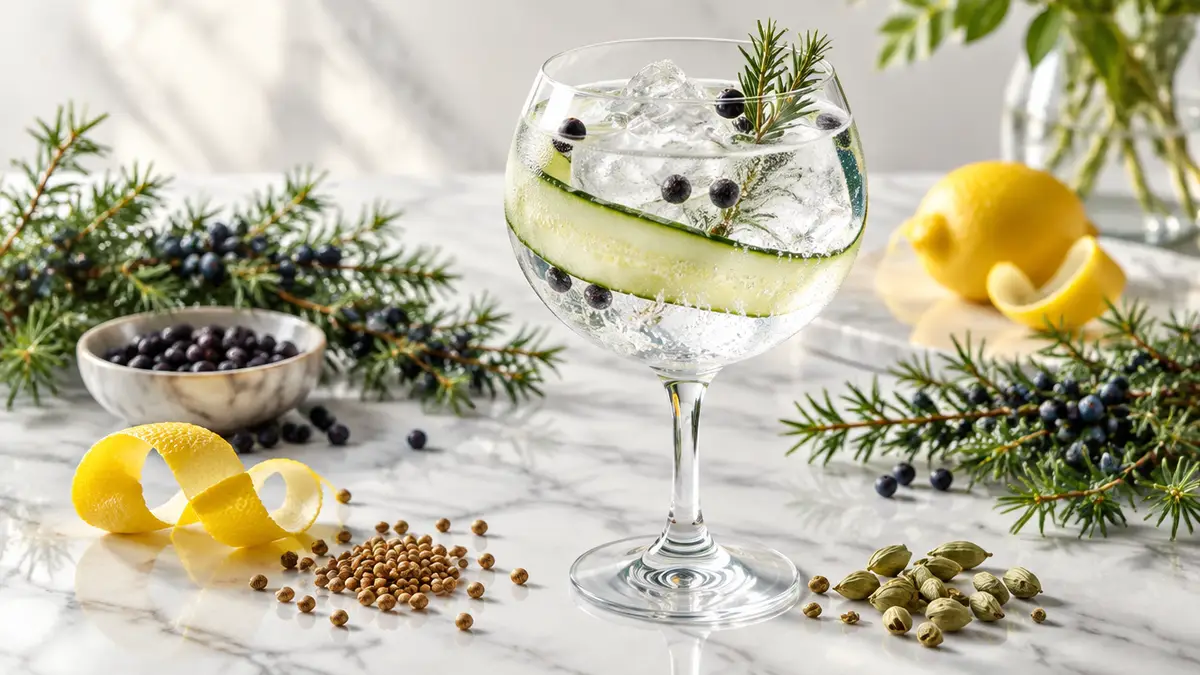
- Botanicals: juniper plus other ingredients — coriander seed, angelica root, orris root, citrus peel, cassia, liquorice, cardamom and many more.
- Flavouring: botanicals are steeped in the spirit and redistilled (the traditional method), or suspended in a basket so vapour passes through them (vapour infusion). Cheaper "compound" gins are simply flavoured without redistillation.
- Dilution and bottling: gin is not usually aged, though some "reserve" gins rest briefly in wood.
Styles of gin
| Style | What it means | Taste |
|---|---|---|
| London Dry | All flavour from redistillation; nothing but water and a tiny amount of sugar may be added after. Can be made anywhere. | Juniper-forward, dry, pine and citrus |
| Plymouth | Historic style associated with Plymouth, England | Softer, earthier, slightly sweeter |
| Old Tom | Lightly sweetened 18th–19th-century style | Rounder, sweeter — great in a Tom Collins |
| Navy Strength | Bottled at about 57% ABV | Intense and powerful |
| Contemporary / New Western | Juniper plays a smaller role next to other botanicals | Floral, citrus, cucumber, herbal or spicy |
| Sloe gin | A liqueur of gin steeped with sloe berries and sugar, usually 25–30% | Sweet, plummy, tart |
| Genever | The Dutch ancestor, with a malty "malt wine" base | Bready, malty, closer to whisky |
In the EU and USA a spirit must have a predominant juniper flavour to be called gin. Juniper gives the characteristic pine, resin and slightly peppery notes.
How to make a great gin and tonic
- Choose a large glass — a highball or balloon (copa) glass.
- Fill it to the top with ice. More ice = colder drink and slower dilution.
- Add 1.5–2 oz (45–60 ml) gin.
- Top with 3–5 oz (100–150 ml) chilled tonic, pouring gently down a bar spoon to keep the bubbles.
- Stir once and garnish to match the gin: lime or lemon for classic gins, cucumber for floral styles, grapefruit or orange for citrusy gins, a sprig of rosemary for herbal ones.
Good tonic matters — it is most of the drink. Try Mediterranean or light tonics with delicate gins and classic Indian tonic with juniper-heavy London Dry.
Classic gin cocktails
The Martini, Negroni, Tom Collins, Gimlet and French 75 are all gin-based.
What to try first
The benchmark: pine, citrus and bitter quinine.
Bright and fresh — great with grapefruit.
Sparkling, lemony and easy to love.
Fruity and lower in alcohol.
Taste slowly, alternate with water and eat something first. One standard drink of spirits is just 1.5 oz (44 ml) at 40% ABV. Never drink and drive. What counts as one drink?
Frequently asked questions
What is gin made from?
Gin is a neutral spirit, usually made from grain, that is flavoured with juniper berries and other botanicals such as coriander, citrus peel and angelica root.
Does London Dry gin have to come from London?
No. London Dry is a production method — all flavour must come from redistillation with botanicals, with essentially nothing added afterwards. It can be made anywhere in the world.
Why is tonic water bitter?
Tonic contains quinine, a bitter compound from the bark of the cinchona tree, historically used to prevent malaria. Modern tonic has far less quinine than medicinal doses.