Rum Guide: White, Gold, Dark, Spiced and Agricole Rum
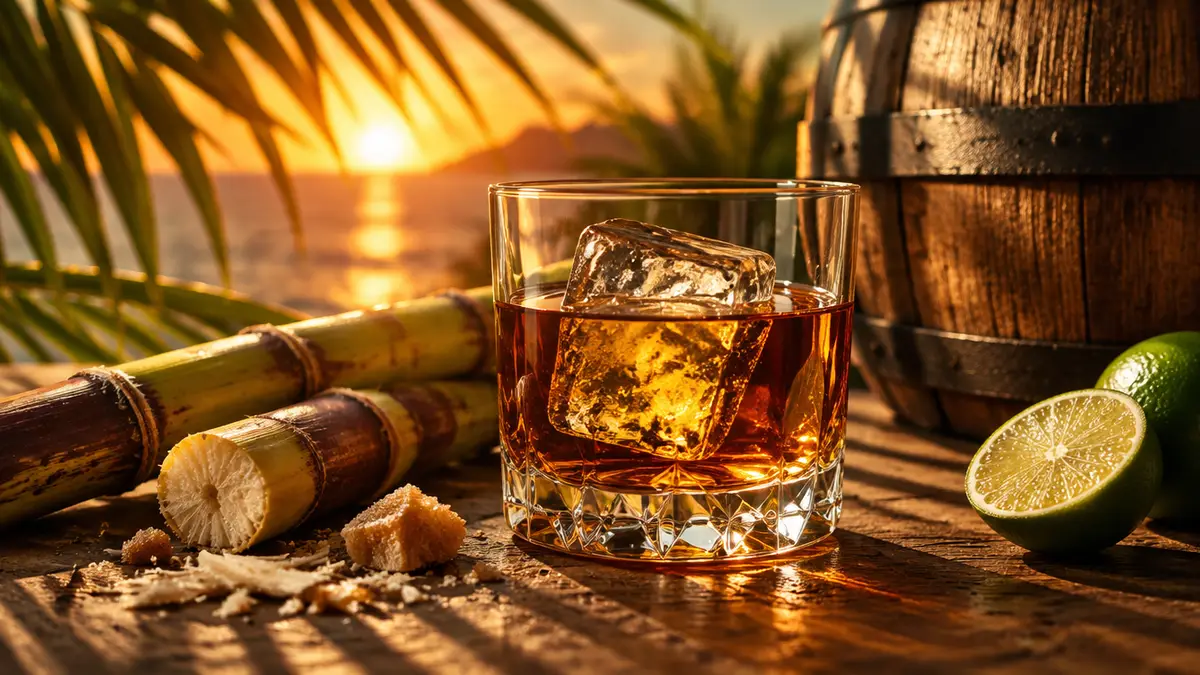
Rum is the spirit of sugar cane: from light Cuban-style rums for mojitos to rich, funky Jamaican pot-still rums and grassy French Caribbean rhum agricole. It is one of the most diverse spirits in the world.
- Made from
- Sugar cane juice, syrup or molasses
- Typical ABV
- 37.5–43% (overproof 57–75%)
- Main regions
- Caribbean, Latin America, also worldwide
- Standard pour
- 1.5 oz / 44 ml
- Serve
- Neat, on ice, in highballs and tiki drinks
A short history
Sugar cane was brought to the Caribbean in the late 15th century, and by the 1600s plantation workers discovered that molasses — the sticky by-product of sugar production — could be fermented and distilled. Barbados is often credited with some of the earliest rum production in the mid-17th century. Rum became central to colonial trade, and its history is inseparable from the brutal Atlantic slave trade that powered sugar plantations. The British Royal Navy issued a daily rum ration from the 1650s until 1970. Today rum is made in more than 80 countries.
How rum is made
- Raw material: most rum is made from molasses. Rhum agricole and cachaça are made from fresh-pressed cane juice.
- Fermentation: from 24 hours (light, clean rum) to two weeks or more (heavy, fruity "funky" rums, especially in Jamaica).
- Distillation: column stills make lighter rums; pot stills make heavier, more aromatic rums. Many rums blend both.
- Ageing: often in ex-bourbon barrels. In the tropics, ageing is much faster than in Scotland, but more is lost to evaporation (up to 6–10% a year).
- Blending and bottling: rules vary widely by country; some rums contain added sugar, colour or flavour.
Rum styles by tradition
| Tradition | Where | Style |
|---|---|---|
| Spanish style (ron) | Cuba, Puerto Rico, Dominican Republic, Panama, Venezuela | Light, smooth, column-distilled, often aged |
| English style (rum) | Jamaica, Barbados, Guyana, Trinidad | Rich, full-bodied, pot-still character; Jamaica is famously "funky" |
| French style (rhum agricole) | Martinique, Guadeloupe, Haiti | From fresh cane juice: grassy, vegetal, floral |
| Cachaça | Brazil | Fresh cane juice spirit; the base of the Caipirinha |
White, gold, dark and spiced — what do they mean?
- White / silver: unaged or lightly aged and often filtered clear. Light and mixable — the base of the Mojito and Daiquiri.
- Gold / amber: some ageing and/or added colour; smooth and versatile.
- Dark / black: longer ageing or added molasses and caramel; rich and sweet. Used in the Dark ’n’ Stormy.
- Aged / añejo: sipping rums with years in oak.
- Spiced: rum flavoured with vanilla, cinnamon, clove and other spices, often sweetened.
- Overproof: 57–75% ABV; used in small amounts in tiki drinks. Treat with great care.
These terms are loosely regulated in most countries. A dark rum may simply contain caramel colour, and "solera 23" can mean the oldest rum in a solera blend, not the average. Look at the producer and country of origin instead.
How to drink rum
- Highballs: rum and cola with lime (Cuba Libre), rum and ginger beer.
- Classics: Daiquiri, Mojito, Mai Tai, Piña Colada, Planter's Punch.
- Neat or on ice: aged sipping rums from Barbados, Guyana, Guatemala or Venezuela.
- In the kitchen: dark rum in desserts, bananas foster, fruit cakes.
What to try first
Clean and bright — you will never want a frozen strawberry version again.
Balanced, fruity and smooth — a perfect sipping introduction.
Easy, spicy and refreshing.
Big notes of overripe banana and pineapple. Love it or hate it!
Taste slowly, alternate with water and eat something first. One standard drink of spirits is just 1.5 oz (44 ml) at 40% ABV. Never drink and drive. What counts as one drink?
Frequently asked questions
What is rum made from?
Rum is distilled from sugar cane products — usually molasses, or fresh cane juice for rhum agricole and cachaça.
What is the difference between white rum and dark rum?
White rum is unaged or lightly aged and filtered clear, making it light and ideal for cocktails. Dark rum is aged longer or has added caramel or molasses, giving richer, sweeter flavours.
Is spiced rum real rum?
Yes — it is rum flavoured with spices and often sweetened. Many are bottled below 40% ABV, so some countries label them "spirit drink" rather than rum.