What to Try First: Easy, Approachable Drinks for Beginners
Starting with a peated Islay whisky or a bone-dry Italian red is like learning to swim in the ocean. Begin with approachable styles, notice what you like, and branch out from there.
The golden rules for first tries
- Start lighter, sweeter and fruitier. Most beginners find softer, fruit-forward drinks easier than bitter, tannic, smoky or very dry ones.
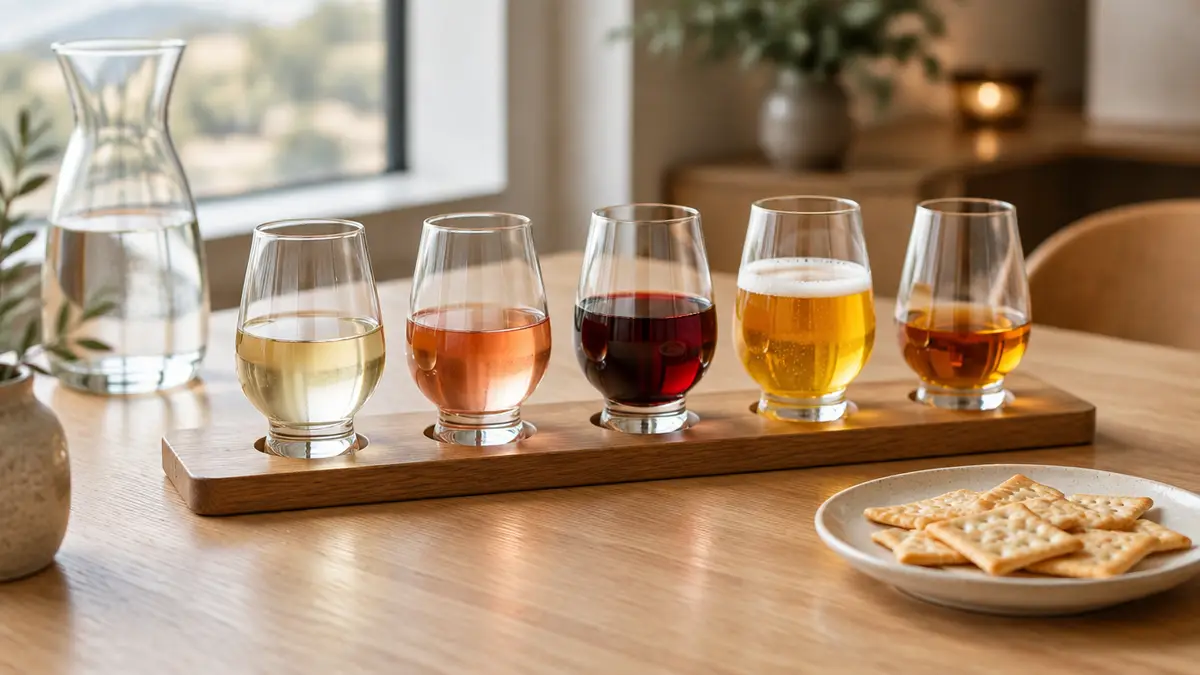
- Taste small amounts. A tasting flight or half measure lets you try more styles for the same amount of alcohol.
- Try mixed before neat. A spirit in a highball or classic cocktail shows its flavour without the burn.
- Compare in pairs. Two contrasting glasses teach you more about your preferences than one.
- Eat something. Food makes almost every drink more enjoyable and slows alcohol absorption.
Wine
Light, fruity and gently sparkling. Moscato is sweet and only about 5–6% ABV.
Aromatic, peachy and refreshingly acidic with a touch of sweetness. Look for "Kabinett" or "off-dry".
Crisp strawberry and citrus flavours; very food-friendly.
Light-bodied reds with cherry flavours and soft tannins — great first reds.
A plush, round red with plum and chocolate notes, less grippy than Cabernet.
Leave big tannic reds (young Barolo, Cabernet Sauvignon), bone-dry whites and oxidative styles for later. Read the full wine guide.
Beer
Clean, crisp and lightly bready — the style most people already know.
Soft and fluffy with banana and clove notes, low bitterness.
Orange peel, coriander or real fruit make them approachable.
Caramel malt with gentle hops — a good bridge toward stronger flavours.
Dark and roasty but smooth and slightly sweet, like iced coffee.
Very bitter double IPAs, sour beers and imperial stouts (often 10%+ ABV) are best once you know what you like. See beer styles explained.
Whisky
Triple-distilled, smooth and light with honey and vanilla.
Sweet corn, vanilla and caramel with a soft profile — excellent in a highball.
Fruity and honeyed, often matured partly in sherry casks. No smoke.
Delicate and balanced — try it as a highball with soda water.
Heavily peated whiskies from Islay taste of smoke, iodine and sea spray. Many people grow to love them, but they can be a shock as a first whisky.
More in our whisky guide.
Other spirits
Rums from Cuba, Puerto Rico or Panama are light and sweetly toasty. Try with cola and lime.
Start with a classic London Dry or a citrus-forward modern gin, lots of ice and good tonic.
Rested in oak for 2–12 months; smoother and rounder than blanco. Sip it or try a Paloma.
Fruity and warming; VSOP is lovely neat with a splash of water.
Vodka is neutral by design — it shines in mixed drinks.
Liqueurs, cider and sake
Bittersweet orange, bubbles and low alcohol — Italy's favourite aperitivo.
Sweet almond and marzipan flavours.
Apple-fresh and easy-drinking, usually 4–6% ABV.
Fruity, clean and floral — a gentle introduction to sake.
Build a beginner tasting flight
A great way to start is a small flight at a bar, winery or at home with friends. For example:
| Theme | Pour side by side | What you learn |
|---|---|---|
| Wine colours | Sauvignon Blanc · Provence rosé · Pinot Noir | How skin contact changes flavour and texture |
| Beer basics | Pilsner · Hefeweizen · Stout | Lager vs ale yeast and the role of roasted malt |
| Whisky world | Irish · Bourbon · Speyside malt | Grain, still and barrel differences |
| Agave | Blanco · Reposado · Mezcal | The effect of oak ageing and roasting agave |
Keep samples small: about 1–2 oz (30–60 ml) of wine or 0.5 oz (15 ml) of spirits each. Three spirit samples of 15 ml add up to about one standard drink.
Alcohol-free wine, beer and spirits have improved enormously. Many flavour lessons — hops, citrus, botanicals, tannins — carry over. See our mocktail and low-ABV guide.
Frequently asked questions
What alcohol tastes the least like alcohol?
Sweet, fruity and lower-strength drinks mask alcohol the most: Moscato, fruit ciders, spritzes and many cocktails. Be careful — drinks that don't taste strong can still contain a lot of alcohol.
What is a good first wine for someone who doesn't like wine?
Try a lightly sweet, sparkling Moscato d'Asti or an off-dry Riesling, served well chilled. Many people who "don't like wine" have only tasted dry, tannic reds.
What is the smoothest whisky for beginners?
Blended Irish whiskey and wheated bourbon are often described as the smoothest. A few drops of water or a highball with soda make any whisky gentler.