Sake Guide: Japanese Rice Wine, Grades and How to Serve It
Sake is often called "rice wine", but it is brewed more like beer — and tastes like neither. Delicate, savoury and remarkably food-friendly, it is one of the most refined drinks in the world.
- Made from
- Rice, water, koji mould, yeast
- Typical ABV
- 14–16% (undiluted genshu 17–20%)
- Origin
- Japan
- Standard pour
- 5 oz / 150 ml (around 1.2 standard drinks at 15%)
- Serve
- Chilled, room temperature or warm, depending on style
A short history
Rice-based alcohol has been made in Japan for at least 1,300 years, probably influenced by Chinese techniques. Early sake was made in shrines and temples and remains deeply connected with Shinto ritual. Brewing techniques were refined over centuries in regions like Nada and Fushimi, where excellent water and rice come together. Today there are about 1,000 sake breweries (kura) in Japan, and sake is increasingly brewed abroad.
How sake is made
- Rice polishing: special sake rice is milled to remove the outer layers, which contain fats and proteins that can cause rough flavours. The more polished, the more delicate the sake.
- Koji: steamed rice is inoculated with koji mould (Aspergillus oryzae), which converts starch into sugar.
- Multiple parallel fermentation: starch-to-sugar conversion and yeast fermentation happen at the same time in the same tank — unique among the world's drinks and the reason sake reaches around 18–20% naturally.
- Pressing, filtering and pasteurising: the sake is separated from the lees, usually filtered and pasteurised, rested and often diluted to about 15%.
Sake grades
Grades depend on the polishing ratio (seimai buai — the percentage of rice grain remaining) and whether a small amount of distilled alcohol is added.
| Grade | Rice remaining | Style |
|---|---|---|
| Junmai | No minimum set (commonly around 70%) | Pure rice, no added alcohol; fuller, savoury, rice-forward |
| Honjozo | 70% or less | A little distilled alcohol added; light and dry |
| Junmai Ginjo / Ginjo | 60% or less | Fruity (melon, pear, apple), floral, elegant |
| Junmai Daiginjo / Daiginjo | 50% or less | Most refined, aromatic, delicate — often the most expensive |
| Futsushu | Table sake | Everyday sake, often served warm |
"Junmai" means pure rice with no added alcohol. Adding a small amount of alcohol (in honjozo, ginjo and daiginjo) is a traditional technique that lifts aroma and lightens the body — it is not a sign of lower quality.
Other styles
- Nigori: coarsely filtered, cloudy, creamy and often slightly sweet. Shake gently before pouring.
- Nama: unpasteurised, fresh and lively. Must be kept refrigerated.
- Genshu: undiluted, around 17–20% ABV.
- Sparkling sake: lightly fizzy, often low alcohol and sweet.
- Koshu: aged sake, amber and nutty.
How to serve sake
| Temperature | Best for |
|---|---|
| Chilled (5–10 °C) | Ginjo, daiginjo, nama, sparkling — preserves delicate fruit aromas |
| Room temperature (15–20 °C) | Junmai and many everyday sakes |
| Warm, "nurukan" (about 40 °C) | Junmai and honjozo; brings out savoury umami and softness |
| Hot, "atsukan" (about 50 °C) | Robust table sakes, especially in winter |
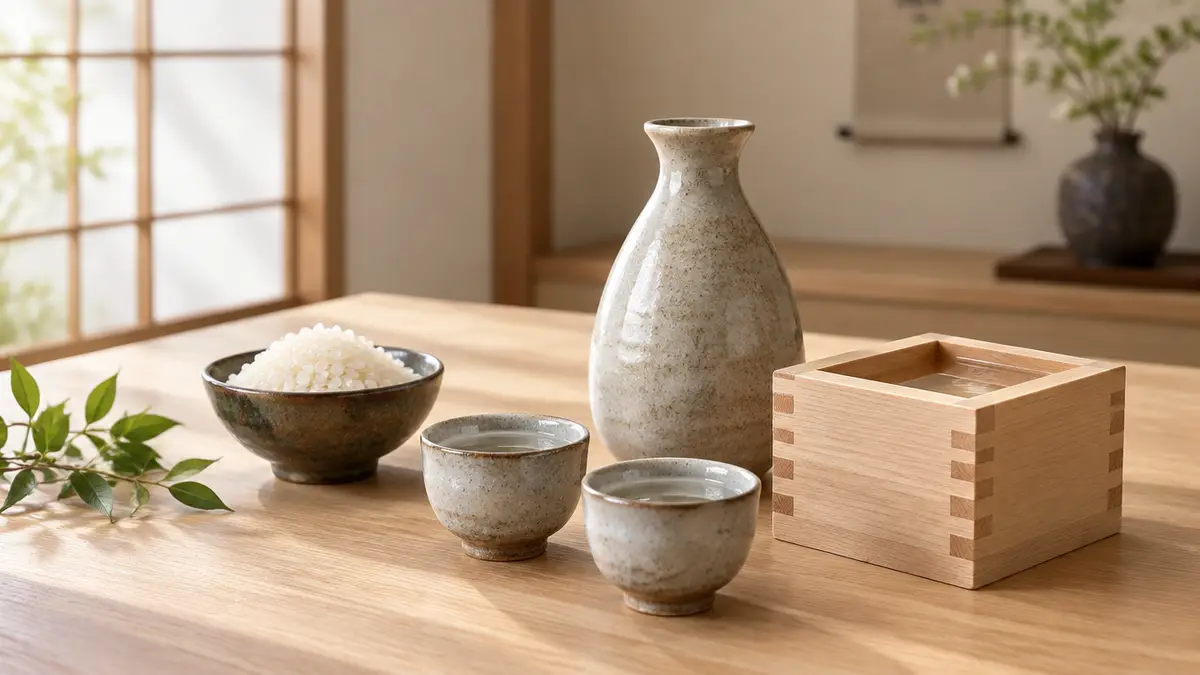
Sake is traditionally poured from a flask (tokkuri) into small cups (ochoko), but a wine glass is excellent for aromatic ginjo styles. Etiquette: pour for others and let them pour for you; never fill your own cup. Opened sake should be refrigerated and enjoyed within about a week or two.
Food pairing
Sake is rich in umami and low in acidity, making it brilliant with sushi and sashimi, tempura, grilled fish, tofu, mushrooms and even cheese. Warm junmai is lovely with hot pots and grilled chicken (yakitori).
What to try first
Fruity, clean and easy to enjoy.
Discover how different sake tastes when heated.
Creamy and sweet — like a rice dessert in a glass.
Low in alcohol and fun as an aperitif.
Taste slowly, alternate with water and eat something first. One standard drink of spirits is just 1.5 oz (44 ml) at 40% ABV. Never drink and drive. What counts as one drink?
Frequently asked questions
Is sake a wine or a beer?
Neither exactly. It is brewed from grain like beer, but it is not carbonated and has a wine-like strength of about 15%. Its unique brewing process sets it apart.
Should sake be served hot or cold?
It depends on the style. Premium ginjo and daiginjo sakes are usually served chilled; many junmai and everyday sakes are delicious warm.
Does sake go bad?
Sake is best within about a year of bottling and within 1–2 weeks of opening. Keep it in the fridge, away from light.