Cider and Perry Guide: Styles, Regions and How to Drink It
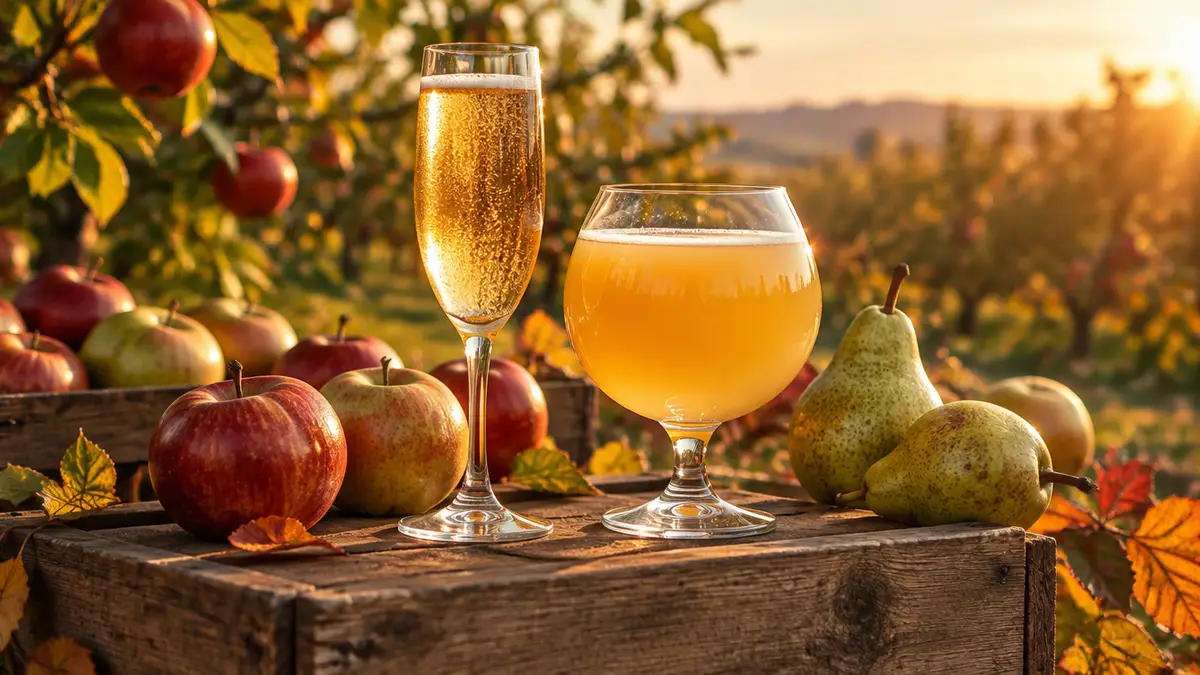
Cider is to apples what wine is to grapes. Beyond sweet mass-market brands lies a world of dry, sparkling, funky and complex ciders — many made with traditional varieties grown for centuries.
- Made from
- Fermented apples (cider) or pears (perry)
- Typical ABV
- 4–8% (ice cider 7–13%)
- Styles
- Dry to sweet, still to sparkling
- Standard serving
- 12 oz / 355 ml at 5%
- Serve
- Chilled, 8–12 °C for traditional styles
A short history
Apples were fermented in Europe long before written records, and cider was widespread in Roman Britain and Normandy. In medieval England, cider was often safer to drink than water, and farmworkers were sometimes partly paid in it. Colonists took apple trees to North America, where cider was the everyday drink of the early USA before beer took over. Today the UK drinks more cider than any other country, while craft cider is booming in the USA.
How cider is made
- Apples: traditional cider uses special varieties classed as sweet, sharp (acidic), bittersweet or bittersharp (tannic). Dessert apples make lighter ciders.
- Milling and pressing: apples are crushed into pulp (pomace) and pressed.
- Fermentation: with wild or cultured yeast, over weeks or months.
- Maturation and finishing: the cider may be aged, blended, back-sweetened, carbonated, or bottle-conditioned like Champagne.
Styles and regions
| Tradition | Style |
|---|---|
| English (West Country) | Often dry and tannic from bittersweet apples; "scrumpy" is rustic farmhouse cider |
| French cidre (Normandy, Brittany) | Often lightly sparkling, fruity and lower in alcohol; labelled doux (sweet), demi-sec or brut (dry). Pommeau and Calvados come from the same apples. |
| Spanish sidra (Asturias, Basque Country) | Still, tart and funky; traditionally poured from a height (escanciar) to aerate it |
| American and Canadian craft cider | Very varied: dry, hopped, fruited, barrel-aged; Quebec invented ice cider |
| German Apfelwein (Frankfurt) | Tart, still, served in patterned glasses |
Perry: cider's elegant cousin
Perry (in France, poiré) is made from fermented perry pears — not the pears you eat. It is often delicate, floral and lightly sparkling. "Pear cider" in supermarkets is usually made from pear concentrate and is a different, sweeter product.
Ice cider
Invented in Quebec in the 1990s, ice cider is made from apples or juice frozen by winter cold, concentrating the sugars. It is sweet, intense and around 7–13% ABV — a wonderful dessert drink.
How to drink cider
- Temperature: mass-market ciders very cold; traditional and craft ciders at 8–12 °C to reveal aroma.
- Glass: a wine glass or tulip for craft cider; a pint glass for everyday cider.
- With food: dry cider with pork, cheese (especially Camembert and cheddar), roast chicken, seafood and crêpes.
What to try first
Dry, fruity and gently sparkling — pure apple.
Balanced and full-flavoured.
Floral and delicate.
An unforgettable dessert pairing.
Taste slowly, alternate with water and eat something first. One standard drink of spirits is just 1.5 oz (44 ml) at 40% ABV. Never drink and drive. What counts as one drink?
Frequently asked questions
Is cider gluten-free?
Cider made only from apples or pears is naturally gluten-free. Some flavoured or hopped ciders may contain other ingredients, so check the label.
Is hard cider stronger than beer?
Most ciders are 4–8% ABV — similar to or slightly stronger than regular beer. Some craft and ice ciders are stronger.