How to Taste Wine, Beer and Spirits Like a Pro
Tasting is not a secret skill reserved for sommeliers. It is simply paying attention. With four steps and a few words to describe what you notice, you will enjoy every glass more — and learn what you actually like.
The four steps: look, smell, taste, finish
Professional tasters of wine, beer, whisky and coffee all use the same basic method. It takes about a minute, and you can do it quietly at a dinner table without anyone noticing.
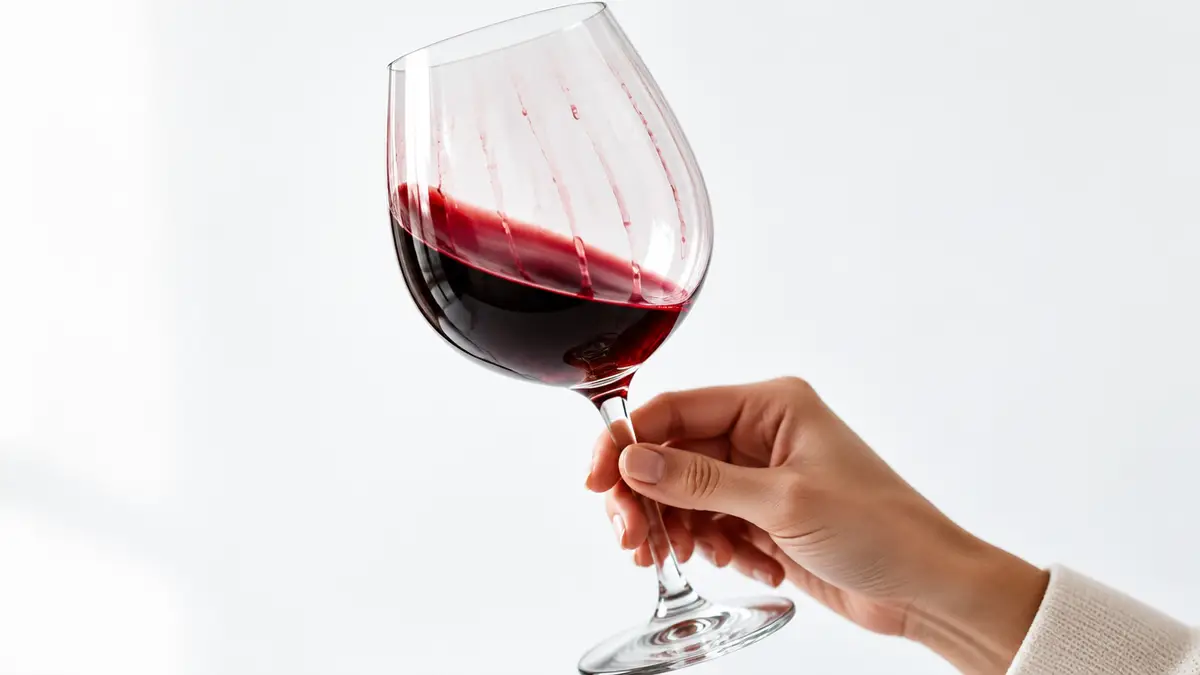
- Look. Hold the glass against a white background (a napkin or tablecloth). Note the colour, depth and clarity.
- Smell. Swirl gently to release aromas, then take several short, gentle sniffs. This is where most of the flavour information comes from.
- Taste. Take a small sip and let it move around your whole mouth for a few seconds. Notice sweetness, acidity, bitterness, alcohol warmth and texture.
- Finish. Swallow (or spit) and notice what remains — how long the flavour lasts and whether it changes.
1. Look: what colour tells you
Colour is a quick clue to age, grape, style and even how a drink was made.
- White wine ranges from almost clear with green tints (young, crisp, unoaked) to deep gold (older, oaked or sweet).
- Red wine is purple at the rim when young and shifts to brick and garnet with age. A pale red like Pinot Noir usually tastes lighter than an inky one like Syrah.
- Beer runs from straw-pale lager to jet-black stout. Colour comes from how much the malt was roasted — it does not tell you how strong a beer is.
- Aged spirits get colour from the barrel, but some brands add caramel colouring (E150a), so darker does not always mean older.
You may notice "legs" or "tears" running down the glass after swirling. They mostly indicate alcohol and sugar content, not quality.
2. Smell: the most important step
Your tongue detects only five basic tastes: sweet, sour, salty, bitter and umami. Everything else we call "flavour" — cherry, vanilla, smoke, citrus, pine — comes from aroma molecules reaching the smell receptors at the back of your nose. That is why food tastes of nothing when you have a cold.
How to smell wine and beer
Swirl the glass to coat the sides and release aromas, then put your nose into the glass and take two or three short sniffs. Pause, then try again. First impressions are often the clearest.
How to nose a spirit
Spirits are 40% alcohol or more, and a deep sniff will numb your nose. Instead:
- Don't swirl hard. Hold the glass at chin height, then slowly bring it toward your nose.
- Keep your mouth slightly open while you breathe in — this lets alcohol vapour escape.
- Move the glass across from one nostril to the other; each may pick up different notes.
- Add a few drops of water. It can "open up" aromas and makes higher-strength spirits easier to explore.
3. Taste: what your mouth can tell you
Take a small sip — smaller than you think — and move it around your mouth. Focus on structure before specific flavours:
| Element | What to notice | Where you feel it |
|---|---|---|
| Sweetness | Dry, off-dry, medium or sweet? | Tip of the tongue |
| Acidity | Does it make your mouth water? Crisp or soft? | Sides of the tongue, saliva |
| Bitterness | Especially in beer (hops), amaro, coffee liqueur | Back of the tongue |
| Tannin | A drying, gripping feel, like strong black tea | Gums and cheeks (red wine) |
| Alcohol | Gentle warmth or a hot burn? | Throat and chest |
| Body | Light like skim milk, or full like cream? | Whole mouth — weight and texture |
| Carbonation | Fine and creamy, or big and prickly bubbles? | Tongue and palate |
Then think about flavour: does the taste confirm what you smelled? Are there new notes? Does it change from the front of your mouth to the back?
4. Finish: the aftertaste
The finish is how long flavour lingers after swallowing. A short finish fades in a few seconds; a long finish may last a minute or more. Many experts consider a long, pleasant finish a sign of quality — especially in wine, whisky and cognac.
How to describe what you taste
You do not need poetic language. Start with broad families and narrow down:
| Family | Examples |
|---|---|
| Fruity | Citrus (lemon, grapefruit), orchard (apple, pear), stone fruit (peach), red berries, dark fruit (plum, blackcurrant), tropical, dried fruit |
| Floral | Rose, violet, elderflower, orange blossom |
| Herbal / green | Grass, mint, bell pepper, pine, tea |
| Spicy | Black pepper, cinnamon, clove, nutmeg, liquorice |
| Sweet / oak | Vanilla, caramel, toffee, honey, coconut, toast |
| Earthy / savoury | Mushroom, leather, tobacco, forest floor, bread, yeast |
| Roasted / smoky | Coffee, chocolate, peat smoke, campfire, burnt sugar |
| Mineral | Wet stone, chalk, flint, sea spray |
Aroma memory is personal. If a wine reminds you of your grandmother's strawberry jam, that is a perfectly valid tasting note. Over time, tasting side by side builds your vocabulary faster than reading.
Set up a tasting at home
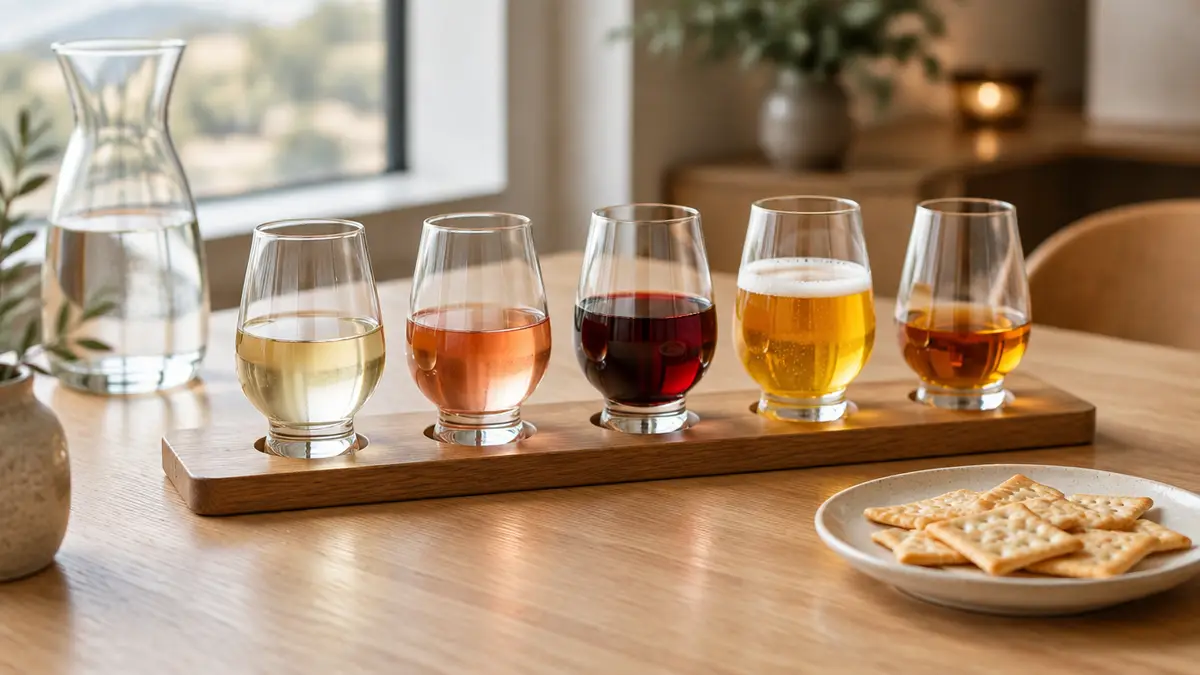
- Compare, don't just taste. Two or three drinks side by side — e.g. an unoaked and an oaked Chardonnay, or a lager and an IPA — teach more than one alone.
- Pour small. 1–2 oz (30–60 ml) of wine, 3–4 oz of beer or 0.5 oz (15 ml) of spirits per sample is plenty. Tasting is about attention, not volume.
- Use a spittoon. Professionals spit — it is completely normal and lets you taste many samples safely.
- Keep water and plain crackers nearby to reset your palate.
- Avoid strong smells: perfume, scented candles and toothpaste will distort flavours.
- Take notes. A few words and a score out of 5 help you remember what you liked.
Common tasting mistakes
- Serving at the wrong temperature — too cold hides aroma, too warm makes alcohol dominate. See our serving temperature guide.
- Filling the glass too full, leaving no space to swirl.
- Tasting after spicy or very sweet food, which changes how everything tastes.
- Judging on the first sip — the first taste "calibrates" your mouth; the second is more accurate.
- Believing the label or price over your own senses.
Next, put your skills into practice with our list of easy drinks to try first, and look up any unfamiliar word in the glossary.
Frequently asked questions
Why do people swirl wine?
Swirling adds oxygen and coats the inside of the glass, which releases more aroma compounds so you can smell them better. It is less useful for spirits, where it mainly releases alcohol vapour.
Should I add water to whisky?
A few drops of water can release more aromas and soften alcohol burn, especially in stronger whiskies. It is a matter of taste — try the same whisky with and without.
Is it rude to spit at a tasting?
Not at all. At wineries, distilleries and trade tastings, spitting is expected. It lets you taste many samples and stay safe, especially if you are driving.