Serving Temperature, Decanting and Ice: A Complete Guide
Temperature is the easiest and cheapest way to make any drink taste better. Add a little knowledge about decanting and ice, and you will serve drinks the way their makers intended.
Serving temperature chart
| Drink | °C | °F |
|---|---|---|
| Sparkling wine, Champagne | 6–8 | 43–46 |
| Light, crisp whites and rosé (Sauvignon Blanc, Pinot Grigio) | 7–10 | 45–50 |
| Full-bodied whites (oaked Chardonnay, Viognier) | 10–13 | 50–55 |
| Light reds (Pinot Noir, Beaujolais) | 12–14 | 54–57 |
| Medium and full-bodied reds | 15–18 | 59–64 |
| Sweet wines (Sauternes, late harvest) | 6–10 | 43–50 |
| Fino and manzanilla sherry | 7–9 | 45–48 |
| Tawny and vintage Port | 12–16 | 54–61 |
| Pale lagers | 3–6 | 38–43 |
| Pale ales, IPAs, wheat beers | 6–10 | 43–50 |
| Stouts, porters, Belgian and strong ales | 10–13 | 50–55 |
| Premium sake (ginjo, daiginjo) | 5–10 | 41–50 |
| Whisky, cognac, aged rum (neat) | 18–20 (room temperature) | 64–68 |
| Vodka, akvavit, limoncello (traditional) | -18 to 4 (freezer or fridge) | 0–39 |
Take white wine out of the fridge 15 minutes before serving; put red wine into the fridge 15 minutes before serving. This one habit fixes most temperature problems.
How to chill a drink quickly
- Ice bucket with water: fill with ice and cold water (and a handful of salt). Water contacts the whole bottle — a wine bottle chills in about 15–20 minutes, much faster than ice alone or the fridge.
- Wet paper towel in the freezer: wrap the bottle and freeze for 15–20 minutes. Set a timer — forgotten bottles can burst.
- Frozen grapes or wine-chilling stones cool a glass without dilution.
- Avoid ice cubes in wine unless you want it diluted (fine for a casual spritz or rosé on a hot day).
Decanting wine: when and how
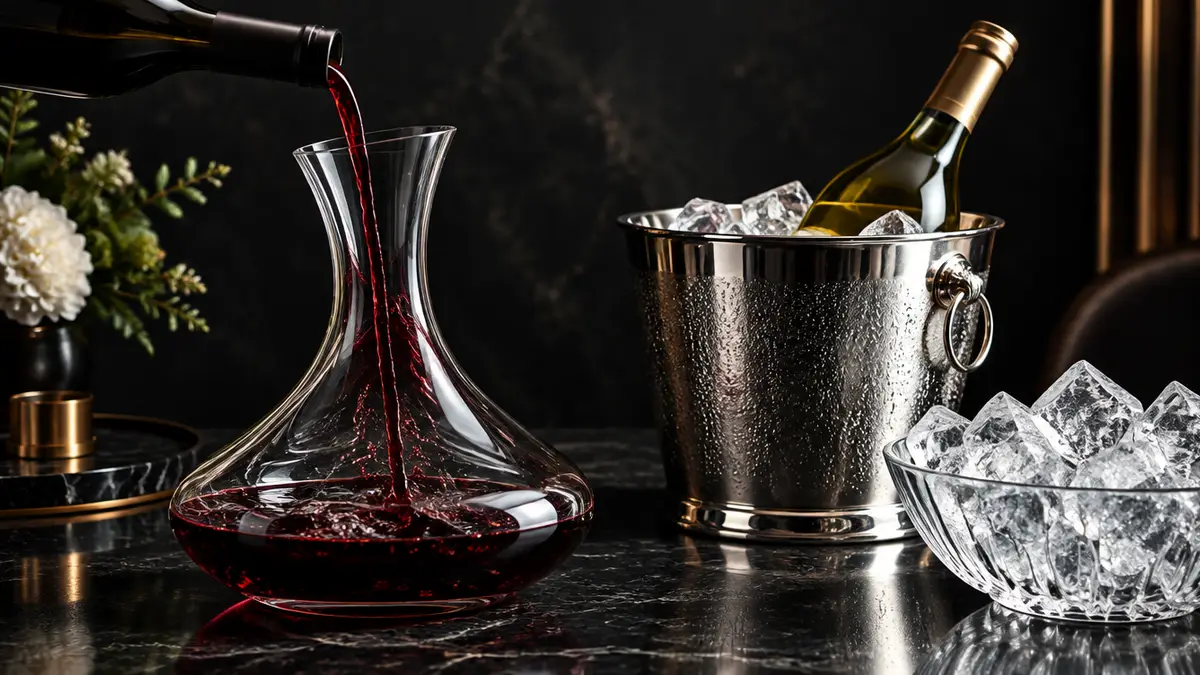
Decanting means pouring wine from its bottle into another vessel. It has two purposes:
- Removing sediment: older red wines and vintage Port develop natural deposits that taste gritty.
- Aeration: exposing young, tannic wines to oxygen softens them and opens up aroma.
| Wine | Decant? | How long |
|---|---|---|
| Young, powerful reds (Cabernet, Barolo, Syrah, Malbec) | Yes | 30–60 minutes, sometimes longer |
| Old reds (15+ years) | Gently, to remove sediment | Just before serving — delicate aromas fade fast |
| Vintage Port | Yes | To remove heavy sediment; 1–2 hours |
| Light reds (Pinot Noir, Beaujolais) | Optional | 15–30 minutes if closed |
| Rich whites (white Burgundy, aged Riesling) | Occasionally | 15–30 minutes |
| Sparkling wine | Rarely | Only if you prefer fewer bubbles |
How to decant an older wine
- Stand the bottle upright for 24 hours so sediment settles to the bottom.
- Open carefully and pour slowly and steadily into the decanter in one motion.
- Hold a light (a candle or phone torch) under the bottle neck.
- Stop when you see sediment reaching the neck. Leave the last inch in the bottle.
No decanter? Any clean glass jug or carafe works. You can also "double decant": pour into a jug, rinse the bottle, and pour back.
Ice: how to use it well
- More ice is better. A glass packed with ice keeps the drink colder, so each cube melts more slowly — you get less dilution, not more.
- Large cubes or spheres for spirits on the rocks — they chill slowly with minimal dilution.
- Standard cubes for shaking, stirring and highballs.
- Crushed ice for Mojitos, juleps and tiki drinks — rapid chill and dilution.
- Clear ice melts more slowly and looks beautiful; make it by directional freezing (water in a small cooler, lid off, in the freezer).
- Fresh ice only: ice that has been in the freezer for weeks absorbs odours. Never reuse ice from shaking.
- Food safety: use a scoop, not a glass, to take ice from a bucket — broken glass in ice is almost invisible.
Letting spirits breathe
Aged spirits don't need decanting, but letting a poured whisky or cognac rest in the glass for a few minutes can soften the first alcohol hit. Crystal decanters look lovely, but spirits can slowly lose aroma in poorly sealed decanters, and old lead crystal should not be used for long-term storage.
Frequently asked questions
What temperature should red wine be served at?
Most red wines taste best at 15–18 °C (59–64 °F), cooler than a modern room. Light reds like Pinot Noir are best around 12–14 °C (54–57 °F).
How long should I decant red wine?
Young, full-bodied reds benefit from 30–60 minutes. Old, fragile wines should be decanted just before serving, mainly to remove sediment.
Does putting ice in whisky ruin it?
No, but it changes it. Ice numbs aroma and flavour; a few drops of water open it up. Use one large cube if you enjoy whisky cold.